Multimap
Multimap was then the UK's ninth most-visited website, the mapping service people used to find a place or plan a route. By the mid-2000s it still behaved like a traditional website, where every action reloaded a new page. The brief for version 2.0 was to make it feel less like a set of pages and more like a tool.
I led the experience architecture for the redesign. The core move was to treat Multimap as an application rather than a website: functionality that changed inline, on the map itself, rather than clicking through to separate pages. We organised the service into a set of "bundles", or lenses, that layered different points of interest over the map, from hotels and travel to motoring and local shopping, built the pages from a reusable system of modules and palettes, and specified a best-in-breed search to sit at the centre of it.
Importantly, we were tasked with ensuring advertising revenues would remain the same or increase, and this was a constant trade off through the design process: balancing the commercial realities of running a large public website, with the desire to make the site easy to use.
The work was documented as a full experience specification: sitemap, architectural principles, page and module designs, and the search model, the blueprint for a modern, map-first Multimap. The site was acquired by Microsoft in 2007 for a reported $50M.
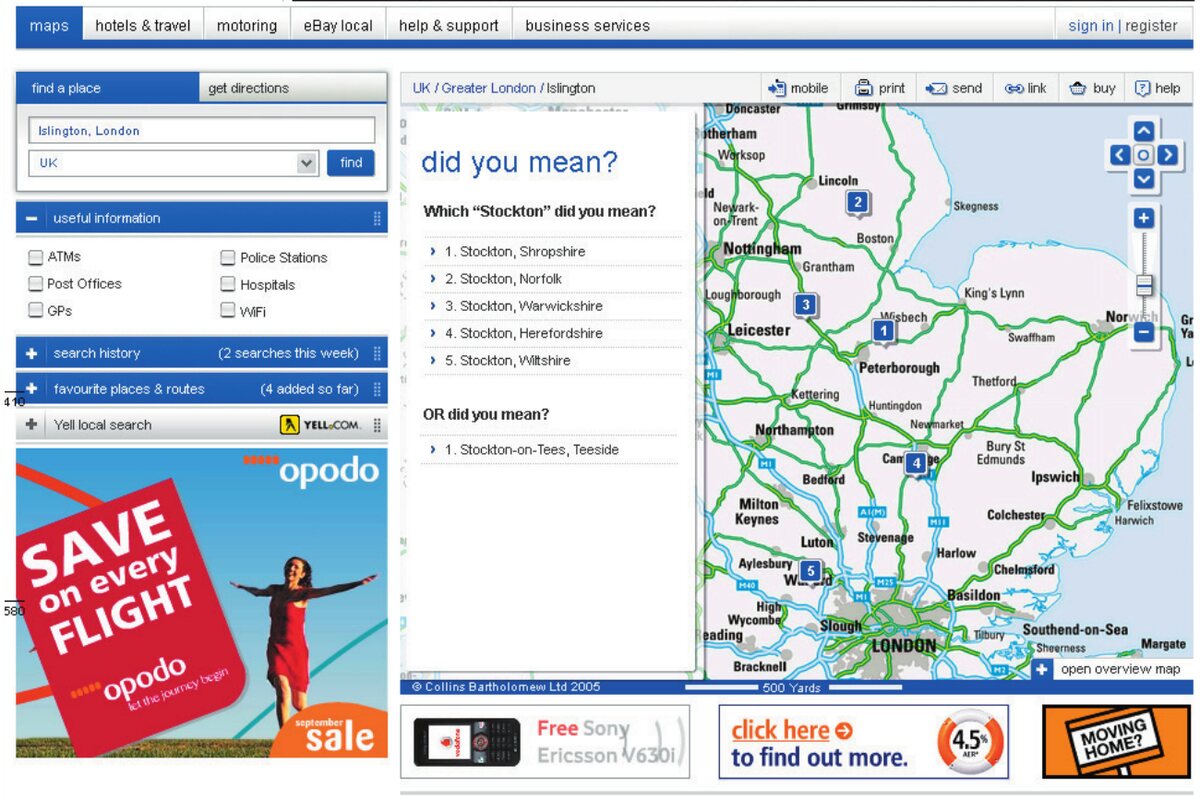
For me, this site redesign cemented my understanding of how to create intuitive user experience design, working with an active and commited product team - both in the agency and on the client side. I also participated in the Multimap product team meetings to represent the user and customer.