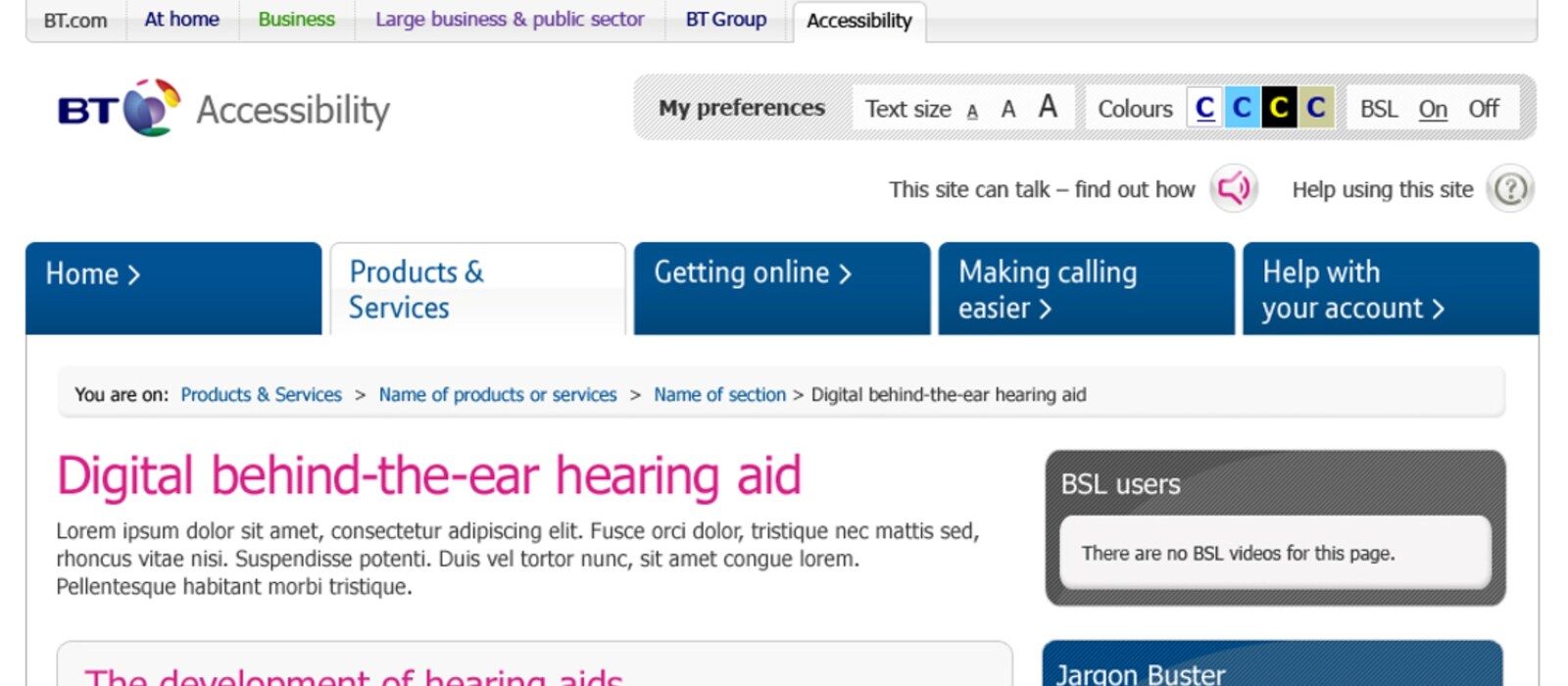
Designed to include everyone
BT wanted to rethink how it served the millions of people in the UK who have accessibility needs, not as an afterthought bolted onto the main site, but as a proper part of the brand. The audience is huge and varied, around 20 million people: older customers, blind and visually impaired people, Deaf and hard-of-hearing people, British Sign Language users, and people with speech, physical, cognitive or mental-health needs, alongside those with temporary injuries and the carers and professionals around them. Many of them do not think of themselves as "disabled" at all. One experience had to work for all of them.
I led the UX. We started by learning from two places: accessibility and disability organisations, for whom inclusion is the whole reason they exist, and the best corporate attempts we could find, which turned out to be surprisingly thin. The organisations taught us to be honest and positive, to keep contact routes visible, and to include everyone rather than design for a single need. The corporate sites showed that simple, linear navigation and an inclusive "us and you" voice go a long way. The core insight was that accessibility has to be personal: one person needs to hear it, another to read it, another needs larger text, specific colours, more time, or British Sign Language as their first language.
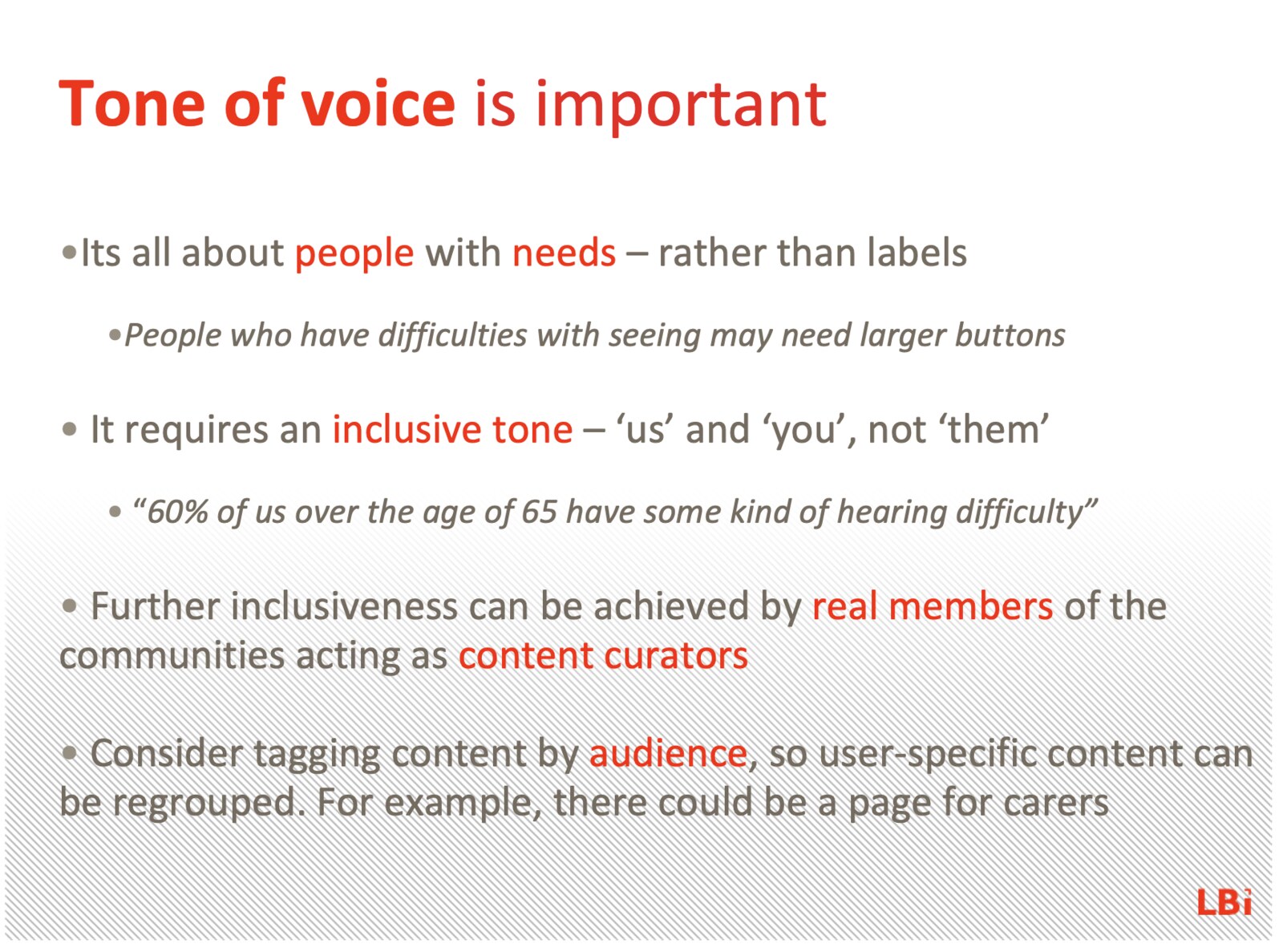
We designed a person-first experience built around people with needs, not labels. The content spoke inclusively, in an "us and you" voice, with a tone that was fearless, honest and empathetic: willing to discuss difficult things openly, and to show real people living full lives. The same pages came in standard, large-type and high-contrast versions, so people could choose what suited them. And a "contact us any way you want" approach opened up help lines, textphone, chat and email, so Deaf and speech-impaired customers could authorise account queries without ever having to speak on the phone.
BT came away with an accessibility offer designed as a genuine part of the brand rather than a compliance exercise: an inclusive, person-first experience spanning products, plans and support content, built to include the 20 million people in the UK with accessibility needs.
People in the UK with accessibility needs the redesigned BT experience set out to include.
My role: UX lead, research, inclusive experience design, content and interaction design