A haptic signature for the moment of trust
In a world of increased stimuli, communicating with customers through only the visual and auditory senses risks getting lost in the noise. How should Mastercard deploy haptic technologies to create deeper connections and increased brand differentiation, using touch as a sensory brand element?
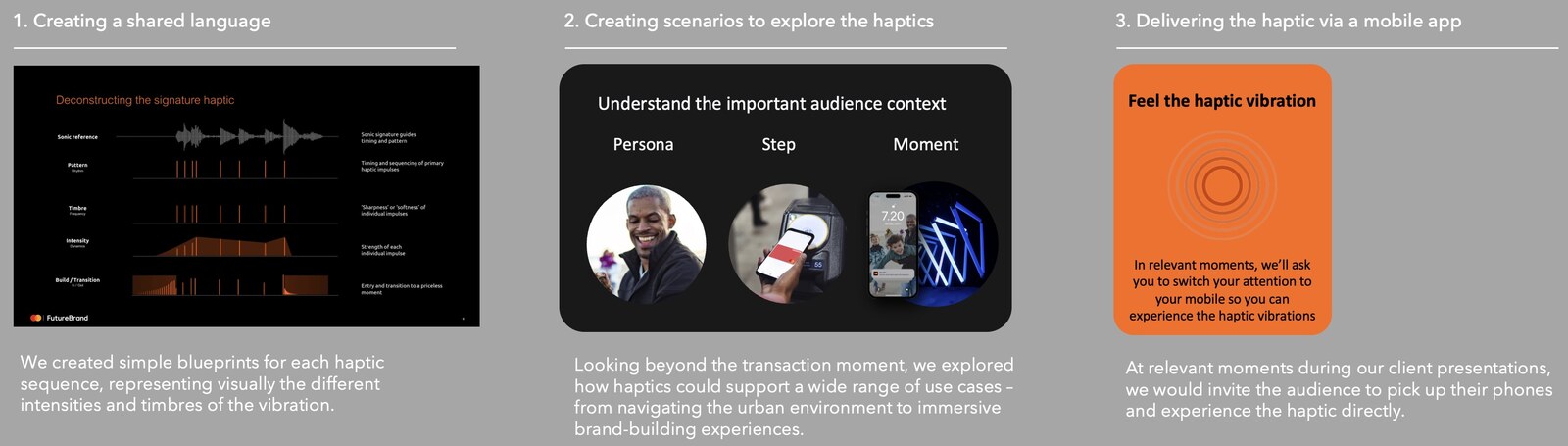
Delivering a haptic design with teams in New York, London and Berlin meant first establishing a common language for discussing what clients liked and didn't like about the options.
We created simple blueprints for each haptic sequence, representing visually the different intensities and timbres of the vibration. Looking beyond the transaction moment, we explored how haptics could support a wide range of use cases, from navigating the urban environment to immersive brand experiences. And at relevant moments during client presentations, we invited the audience to pick up their phones and feel the vibrations directly.
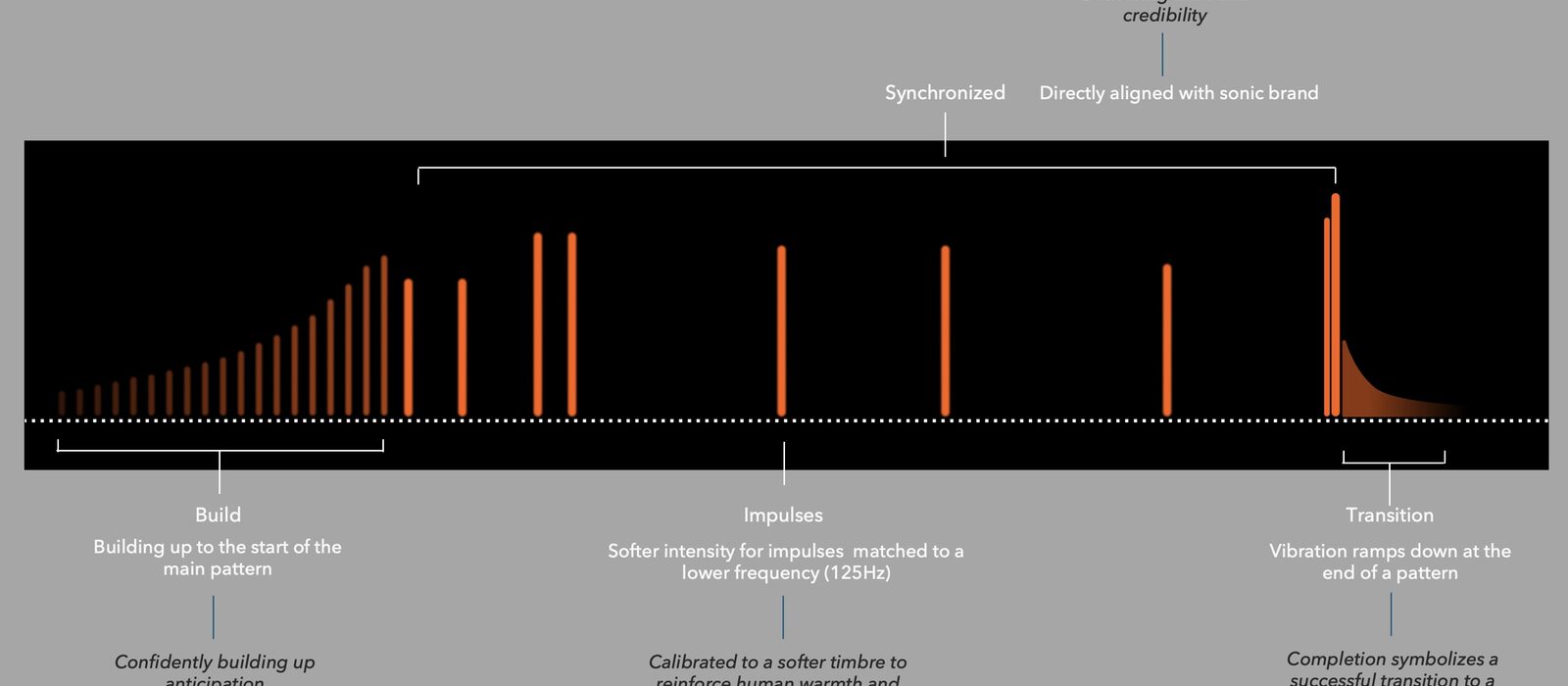
The haptic signature was designed as part of the wider Mastercard brand DNA to support trust and credibility in the moment of transaction: a build, a set of soft impulses calibrated to human warmth, and a ramp-down marking a successful transition. Synchronised and directly aligned with the sonic brand.
The haptic is now part of Mastercard's multisensory toolkit, delivering a unique vibration sequence when a payment is made. It mirrors the sonic melody, providing an additional branding touchpoint as more people keep their cards in their wallets. Mastercard's CMO Raja Rajamannar presented the haptic at Brandweek in 2024. It launched in Latin America and Eastern Europe and is rolling out across 50 million point-of-sale terminals from 2024.
Point-of-sale terminals the haptic is rolling out across from 2024, after launching in Latin America and Eastern Europe.
My role: Experience lead, team leadership across three studios, client facilitation