One brand, seven customer journeys
Nissan was embarking on a global customer experience transformation, re-orienting the business around evolving customer needs and setting the direction for the brand experience it wanted by 2025. Internally that meant refocusing a 300-person digital team, aligning a global dealership network, and staying sympathetic to the products themselves, since manufacturing lead times made the physical design fixed. Nissan's chief marketing officer, Roel De Vries, was direct about what he needed: brand-led customer experiences that felt distinctive and uniquely Nissan.
I planned and led a year-long experience strategy programme, run as three 100-day phases from a brand experience audit through to vision and rollout.
The first phase built the evidence base. We ran twenty-five stakeholder interviews across the UK, USA, Japan and Europe, audited the end-to-end experience against a single archetypal journey in four markets, and set that beside a competitive audit, an aspirational audit and fresh research with car buyers. It surfaced five uncomfortable truths, among them a brand whose role was misunderstood and a customer who was effectively invisible inside the organisation.
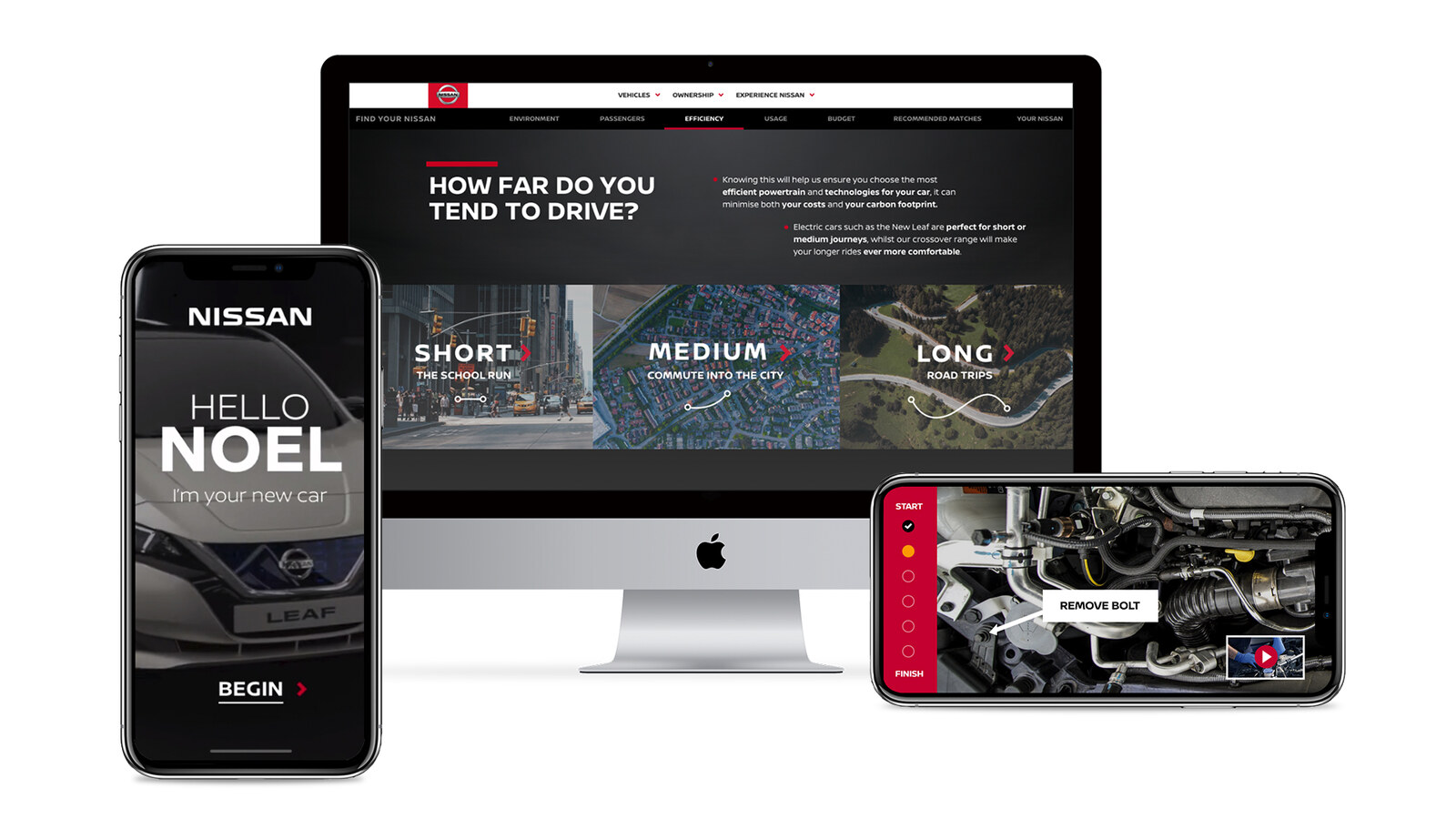
The second phase defined the future state: four global personas, a set of experience principles, current and future journey maps, and the differentiated moments where Nissan could pull ahead. Three of those moments were rapid-prototyped to make them real: a model matchmaker pairing customer behaviours to the range, augmented reality roadside support, and a connected-car first-use app, alongside service proof points such as pay-as-you-drive insurance.
Alongside the strategy I trained the incoming client-side experience team to carry the work, and hired a design team into Interbrand to lead key parts of the design.
The third phase set the vision and the tools to run it. The experience vision drew on the Japanese idea of Ichi-go Ichi-e, "one time, one meeting", the sense that every contact with Nissan is a unique moment that never comes again. Four experience principles gave it teeth: create effortless flow, make technology human, encourage discovery, and spark excitement.
We turned the strategy into things the business could use: experience templates, an evaluation tool and measurement strategy for judging how well future work carried the brand, and a full voice and chat strategy with guidelines, a practical playbook for where and how to bring conversational and voice interfaces into the customer experience.
During the programme Nissan reorganised itself around seven key customer journeys, bringing cross-functional teams together around specific customer needs, including a dedicated focus on the test drive. The wider transformation consolidated more than 200 websites across 100 markets, and moved the business from thinking in touchpoints to thinking in journeys.
Customer journeys Nissan reorganised around, alongside consolidating more than 200 websites across 100 markets.
My role: Experience direction and strategy lead, project planning, team mentor